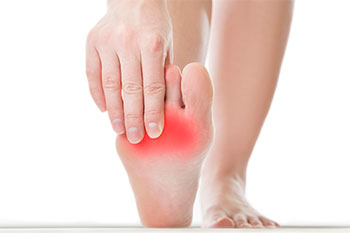
What is Fat Pad Atrophy?
Plantar Fat Pad Atrophy affects the fatty tissue pads which cushion the bones in the ball of the foot. These fat pads thin down with age, which reduces or eliminates their ability to absorb shock and distribute body weight evenly across the foot. These forces then concentrate in the ball of the foot, creating pain and inflammation, along with possible damage to ligaments, nerves, and bones in the surrounding area if not treated properly.
What are the symptoms of Plantar Fat Pad Atrophy?
Plantar Fat Pad Atrophy causes pain and inflammation in the ball of the foot, sometimes giving the sensation of a pebble being stuck in the front of the shoe. This pain typically gets worse when wearing high heels or shoes with thin soles, walking barefoot on hard surfaces, or standing for prolonged periods of time.
Untreated Fat Pad Atrophy may cause damage to ligaments and nerves surrounding the ball of the foot. Additionally, increased pressure may lead to thickened, painful calluses on the ball of the foot and ulcers in the underlying tissue-causing pain in the bones at the base of the toes, and possibly even fractures.
Who is Affected by Fat Pad Atrophy?
Fat Pad Atrophy commonly presents itself in the elderly. Although it can affect both sexes, it can have more impact, and progress more aggressively, in women who wear high heels or tight/narrow shoes, as this type of footwear shifts the body’s center of gravity and places pressure on the balls of the feet.
What Causes Fat Pad Atrophy?
There are several possible causes and contributing factors to Fat Pad Atrophy. Age is the most common cause as fat pads deteriorate with age and do not regenerate. Genetics may also make a person more susceptible to developing this condition as well as wearing high heels or ill-fitting shoes that stress the balls of the feet.
Complications due to diabetes/neuropathy and rheumatoid arthritis can contribute to the formation of Fat Pad Atrophy as well as a previous injury or surgery causing fat pad displacement or deterioration.
Certain gait abnormalities, high arches, chronic steroid use, or depression of the metatarsal bones at the base of the toes may also help Fat Pad Atrophy occur.
How Do You Treat Plantar Fat Pad Atrophy?
A podiatrist may treat Fat Pad Atrophy by prescribing lifestyle and footwear adjustments, or by clinically increasing the cushioning in the ball of the foot.
Lifestyle Adjustments: Any high-impact exercise or repetitive activity that places pressure on the ball of the feet should be avoided, and switched out with low-impact/non-weight-bearing activities.
Footwear Adjustments: Walking barefoot should be avoided-especially on hard surfaces. Any heels that exceed 1 inch should not be worn. Footwear should fit properly, and have ample room in the toe box, and proper support and cushioning. Custom orthotics may be created to provide shock absorption and distribute body weight more evenly across the feet.
When the Cushion in Your Foot Wears Thin, Every Step Hurts
Right Step Foot Care now offers Liposana, a natural fat restoration option for patients living with burning, aching, or bruise-like pain under the heel or the ball of the foot.
Your Feet's Natural Shock Absorbers
The fat pads in your feet are natural shock absorbers. Over time they can shrink or wear down, from age, injury, or years of chronic pressure. Without that cushion, every step puts painful pressure straight onto your bones and joints.
A “Biological Boot” Inside Your Foot
Liposana is a human tissue graft that restores the natural fat pad under your heel and forefoot. It's ready-to-use and free from synthetic agents, and it provides cushioning immediately. When implanted, Liposana acts like a “biological boot” inside your foot.
Cushion. Protect. Integrate.
Cushion
Restores natural shock absorption where the fat pad has thinned.
Protect
Distributes pressure more evenly, easing the load on bones and joints.
Integrate
Because it's native adipose tissue, your body remodels it over time. It becomes your own.
Is Liposana Right for You?
If any of these sound familiar, thinning fat pads may be part of the problem.
Your podiatrist can examine your feet and let you know whether Liposana may be an option for you.
Request Appointment- Bruise-like pain under your heel or forefoot
- Burning, “stone-step” pain on hard floors
- Pain that eases when you sit or use padding, and returns as soon as you stand
- A tender spot underfoot that hurts to touch
- A callus or corn that keeps coming back
What to Expect
Consultation
Your podiatrist reviews your history and discusses whether Liposana may be appropriate for you.
In-Office Implantation
A minimally invasive, in-office procedure, usually under an hour, with a local anesthetic.
Recovery
Your podiatrist walks you through the aftercare protocol and your activity restrictions.
Your Recovery Timeline
Stay off your feet
Stay off your feet as much as possible and let your body start the healing process.
Light walking
Light walking is okay while using your offloading boot.
Ease back in
Slowly start moving again with light activity to help the new tissue settle in.
Back to it
You'll be ready to ease back into the activities you love and feel the difference.
Ready to Walk Comfortably Again?
Schedule a consultation with Right Step Foot Care to find out whether Liposana can help restore the cushion under your feet.
Request AppointmentLiposana is a human tissue allograft, registered with the FDA and regulated under the FDA's HCT/P framework for homologous use. It is not intended to diagnose, treat, cure, or prevent any disease. These statements have not been evaluated by the FDA. Individual results vary.
